Why You Should Monitor Check Valve Performance in Critical Systems
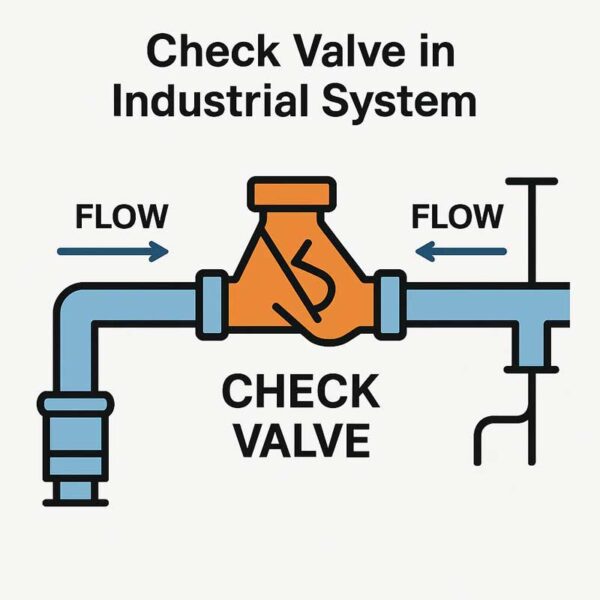
Check valve performance is a very important aspect of ensuring reliability and safety of industrial and commercial systems. Check valves are created to maintain the unidirectional movement of fluids and prevent backflow and they are needed in the system where the reversal flow or increase and decrease in pressure may lead to damage. Even the slightest failure may turn into an expensive downtime or a machine crash without appropriate oversight.
Monitoring is also a focus that promotes operational efficiency as well as aiding compliance with safety and environmental regulations. Plants that deal with any hazardous or pressurized fluids cannot afford any unexpected failures and that is why proactive method of checking the functioning of the check valves is necessary in safety and economical concern.
Importance of Regular Performance Checks
Check valves should also be monitored on a regular basis to help the operators identify problems before they escalate. When the performance is checked, the presence of wear, corrosion, or even the accumulation of debris that might hamper the functionality of the valves may be detected. Early detection of such issues will make sure that the system does not break down and shuts down without prior notice.
Such practice is especially critical in systems that are critical, where even slight disruption can have serious consequences. Systems with high-pressure fluids, such as, are based on using check valves to ensure stability and monitoring is used to avoid circumstances that may jeopardize the integrity of the entire system.
Enhancing System Reliability
The performance of check valves is monitored to add value to the safety of the whole system. Operators can control valves to ensure the flow rates and the pressure levels do not vary because of improper opening and closing. This is essential in the use of this reliability in water treatment plants, chemical processing plants, and heating or cooling systems.
The regular method of monitoring is also useful in scheduling maintenance. It is possible to predict maintenance when operators know the working pattern of every valve. This minimizes chances of unexpected failures and will prolong the life of parts, saving time and money.
Preventing Equipment Damage
Check valves are used to prevent backflow in pumps, compressors, etc. that may lead to mechanical damage to equipment. The failure of a valve may cause reverse flow without being monitored, thus wear or immediate breakdown of other machinery. This may lead to costly repair and serious operational inconvenience.
Monitoring will make sure that the problems are resolved as soon as possible and that the state of other vital parts like ball valves and pumps is maintained. Caring about the performance of the check valves thus is an insurance to the larger system rather than to the valves.
Maintaining Safety Standards
In most industrial settings, safety standards demand well maintained and functional valves. Supervising the check valve operation will aid in adherence to such norms. Failure of valves may be unsafe particularly in systems that have chemicals, steam, or pressurized gases.
Periodical checks on the system performance give a record and prove that the system is under sensible management. This is a useful oversight in cases of auditing or inspection, and is a sign of commitment to safety in the workplace and compliance with regulations.
Optimizing Operational Efficiency
The efficiency of the operations lies in the smooth performance of all the system components including the check valves. A valve that is not functioning properly may upset the flow, decrease the effectiveness of the system, and expend more energy. Monitoring enables operators to identify inefficiencies at an early stage and make the relevant adjustments.
Efficient operation also implies that maintenance would be scheduled in a planned way and not an emergency reaction. This preventive strategy minimizes downtime and assists in the maintenance of constant levels of production or services throughout the facility.
Choosing the Right Monitoring Techniques
Monitoring of the performance of check valves can be done in several ways, starting with manual inspection to the automated sensor system. Smaller systems or where electronic monitoring is not feasible continue to be hand inspected. In high risk or high volume systems, flow rates, pressure, and valve position can be monitored continuously by sensors.
By combining the monitoring tools with the maintenance management software, operators can be able to forecast failures and organize interventions. To illustrate this, it is possible to monitor the performance of a PVC check valve with ball valves in one system and have a complete picture of the fluid network to avoid potential issues before they occur.
Long-Term Cost Benefits
Regular monitoring of check valves is very cost-effective in the long run. Facilities can save on emergency repairs and replacement costs by minimizing unexpected failures and ensuring that equipment connected to them is not damaged. The extension of life of valves also minimizes the number of capital expenditures.
Moreover, monitored systems are more likely to be efficient, which reduces the costs of energy and operations. Consistent valve operation contributes to uninterrupted production or service delivery particularly in industries whose downtime may cause significant losses in revenue.
Conclusion
Check valve performance monitoring is a preventive measure that improves safety, reliability, and efficiency in important systems. It avoids damages on equipment, facilitates regulatory compliance, and enables informed maintenance planning.
With an incorporated monitoring practice, the facilities can be sure that their check valves and other related elements such as ball valves are in the best state. This does not only safeguard investments but also ensures that operations remain stable in the long term, so monitoring is a key element of contemporary industrial management.