Beds that cannot be taken apart for moving
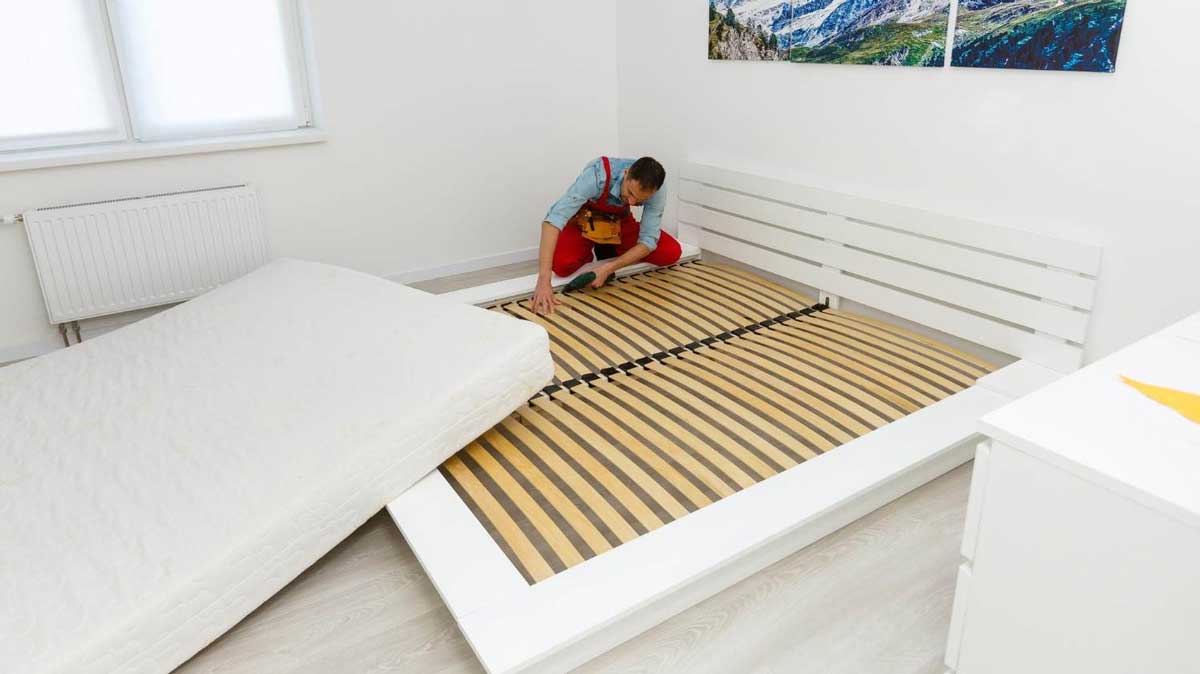
The difficulty of disassembling a bed for moving varies significantly depending on its design, materials, and construction methods. While some beds are designed for easy assembly and transport, others present challenges due to their weight, complexity, or integrated components. Knowing which types of beds are harder to disassemble helps you plan your move more efficiently:
Platform beds
One of the most challenging types to move around is the platform bed with built-in storage. These beds often have drawers, hydraulic lift systems, or hidden compartments under the mattress, making them more complex. The internal mechanisms of these beds, particularly the lift-up frames supported by gas struts, require careful handling to prevent damage or loss of functionality. Disassembling these systems may require removing hinges, brackets, and support elements in a specific order. Without proper knowledge, there is a risk of misalignment, which can affect how the bed functions after reassembly. This process can be time-consuming and may require specialized tools.
Heavy beds
Bed weight should also be considered. Beds made from solid wood or reinforced materials are often heavy and difficult to maneuver. Large headboards, thick frames, and integrated storage units add to the overall mass and awkward shape. As a result, disassembly and transport usually require more than one person to ensure safety. In such cases, professional movers https://paramountmoving.ca/service/furniture-moving-in-calgary/ are often recommended, as they have the necessary experience, additional manpower, and equipment, such as lifting straps or dollies. This improves efficiency, reduces the time required, and minimizes the risk of injury or damage to the furniture or surrounding space.
Upholstered beds
These beds are typically covered in fabric or leather and often have padded headboards and side rails that add bulk and complexity. The upholstery may conceal screws, brackets, and connection points, which makes disassembly more difficult and time-consuming. Technicians must carefully locate hidden fasteners without damaging the outer material. Additionally, extra care must be taken to avoid tearing fabric, scratching leather, or damaging the internal frame when removing components, especially in tightly fitted or high-quality designs.
Canopy and four-poster beds
Canopy and four-poster beds have tall frames with multiple vertical posts. This requires a systematic approach to disassembly, usually beginning with the top sections. These beds often have decorative elements, crossbars, or intricate joinery that must be removed in a specific order to prevent damage. Their height and size make them more difficult to handle, especially in tight spaces, narrow hallways, or on staircases. Careful planning, the proper tools, and often additional assistance are necessary to safely dismantle and transport these large structures.
Antique or custom-made beds
These beds may use non-standard fasteners, older construction techniques, or delicate materials. Over time, joints may become stiff or fragile, increasing the risk of breakage during disassembly. In some cases, the original assembly method is not obvious, so careful inspection is required before taking the bed apart.
Metal frame beds
While some metal beds are modular and relatively easy to take apart, others have partially welded components that cannot be fully disassembled. This limits flexibility during transport and can create challenges when navigating tight spaces. Movers may need to maneuver large, rigid sections through doorways, hallways, and staircases. If not handled carefully, there is an increased risk of scratches, dents, and damage to surrounding walls and surfaces.
Adjustable beds
These beds, particularly the ones with electronic components, are among the most difficult pieces of furniture to handle during a move. These beds include motors, wiring systems, control units, and remote mechanisms that must be carefully disconnected and secured before transport. Mishandling these electrical components can result in damage or complete malfunction. Additionally, the internal mechanisms require stable positioning to prevent strain during transport. Proper reassembly often involves precise alignment, reconnection of wiring, and functional testing to ensure the bed operates safely and correctly after installation.
Another factor that complicates moving a bed is the use of hidden or specialized fasteners. While some modern beds have a minimal number of visible fasteners for aesthetic reasons, this can make disassembly difficult if the joints are hard to reach. The design features of a bed can make it difficult or impossible to disassemble, affecting the time needed to prepare for a move. Even if you are not using moving services, it is important to pay attention to the beds in your living space and adjust your moving schedule accordingly.