How to Safely Clean Contacts in Sensitive Electronic Equipment
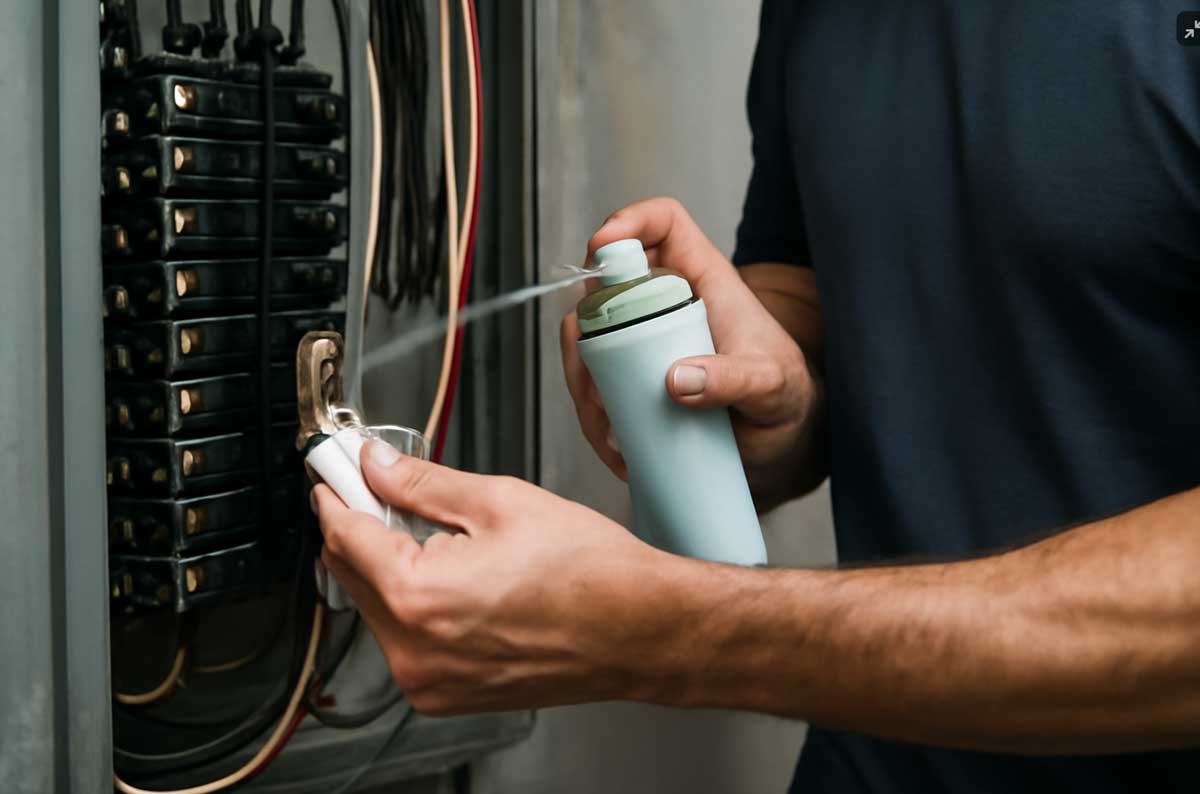
Electronic equipment is much more likely to keep on operating safely and consistently if it undergoes a well-designed preventative maintenance regime.
Regular cleaning can play a major role in this. Through the appropriate use of a suitable contact cleaner spray for electronics from RS, maintenance teams can remove various types of contamination from electrical contacts and connectors.
As far as sensitive electronic equipment is concerned, though, such professionals cannot depend on simply applying a cleaning product and wiping the surface. Electronic assemblies often contain delicate contacts, plastics, coatings, and other materials that may be affected by unsuitable chemicals or excessive mechanical force.
This underscores the importance of maintenance personnel taking a careful, manufacturer-led approach to help minimise the risk of damage while still supporting reliable equipment performance.
Why Is the Cleaning of Electrical Contacts Necessary?
Even simply over the course of normal use, electrical contacts can become gradually contaminated. Particularly in the case of machinery in industrial environments, there can be a high risk of dust, dirt, grease, oxidation, and other residues gathering on accessible contact surfaces.
If this is left unchecked, the contamination may interfere with the quality of an electrical connection. Depending on the nature of the contamination and the specific application, this may contribute to heightened contact resistance, intermittent operation, and/or unreliable signal transmission.
The regular cleaning of electrical contacts should not be treated as a “catch-all” solution for every imaginable electrical fault.
Nonetheless, cleaning can be an important aspect of a broader preventative maintenance programme. It can help restore performance and extend component lifespan, provided the process is undertaken safely and with compatible products.
Essential Safety Precautions for Contact Cleaning
Maintenance personnel should always prioritise safety by adhering to these steps:
- Isolating power completely. This typically entails switching off the equipment and unplugging it or isolating at the circuit breaker.
- Ensuring the work area is well-ventilated. Many contact cleaners are solvent-based and can produce flammable vapours.
- Putting on appropriate personal protective equipment (PPE). This may encompass safety glasses or goggles and chemical-resistant gloves.
- Confirming material compatibility. The use of aggressive solvents can easily cause damage to sensitive plastics, rubbers, coatings, and labels. It is therefore advisable to test on an inconspicuous area or scrap part first.
- Allowing full evaporation before restoring power. Residual solvent may bring about short circuits or fire risks.
Electrical Contacts: The Step-by-Step Cleaning Process
- Prepare the equipment. This usually entails powering down and isolating, as well as discharging any residual energy if capacitors are present. Covers or connectors may also need to be removed to enable access for cleaning.
- Remove loose contamination. Oil-free compressed air or a soft brush can be used to blow or sweep away dust and debris. Positioning the part so that contaminants can fall away, rather than into other areas, can prevent further contamination.
- Apply the contact cleaner. Professionals carrying out cleaning will need to shake the can if the instructions ask for this. This can be followed by applying the cleaner according to the manufacturer’s instructions, using the supplied extension tube where appropriate and avoiding excessive application.
- Agitate only if necessary. If the manufacturer’s instructions permit mechanical agitation, a suitable soft brush or swab may be used gently on stubborn contamination. Avoiding abrasive tools or excessive force is important, particularly on plated contacts.
- Wipe and dry. At this stage, it will be time to use a clean, lint-free cloth to wipe away dissolved soil. It will be vital to allow the cleaner to evaporate fully. No liquid should be left trapped in connectors or under components, so this will need to be carefully checked as well.
- Inspect and reassemble. Once the cleaner has fully evaporated, maintenance staff will need to visually check that contacts are clean and free of residue. They must reassemble the given equipment carefully, restore power only when everything is completely dry, and test the machinery under normal operating conditions.
Final Thoughts: Careful Cleaning Can Help Safeguard Electronic Reliability
That’s it; the proper cleaning of contacts can be a relatively straightforward task when maintenance professionals use a dedicated electronics contact cleaner and follow basic isolation and ventilation rules.
All in all, a careful and controlled approach will greatly help protect the equipment being cleaned, as well as the person doing the job.
This, in turn, can support a comprehensive preventative maintenance strategy that genuinely helps keep the given electrical and electronic devices operating reliably for months and years to come.