Inventory Control Systems: The Definitive Guide for 2026
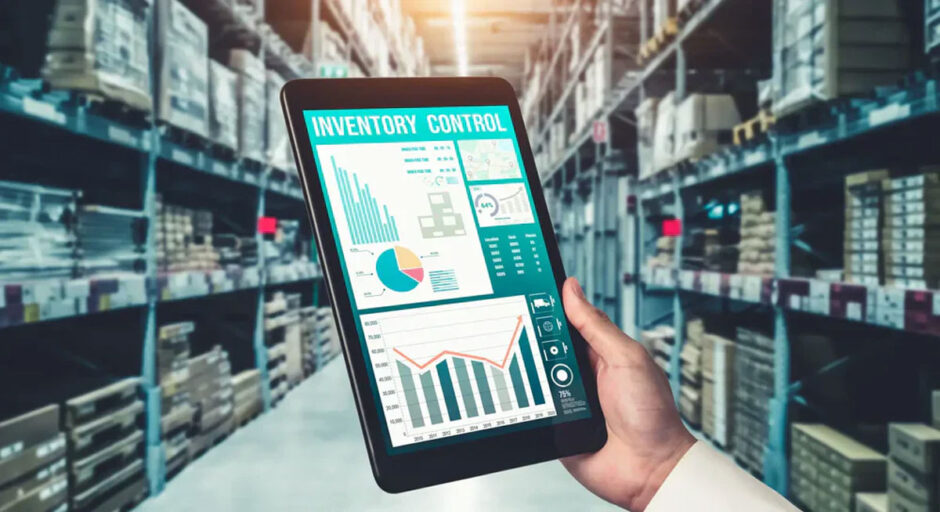
What if I told you that a silent problem is costing retailers worldwide an estimated $1.77 trillion every year? [1] It’s not a new competitor or a sudden market shift. It’s the slow, frustrating drain of inventory distortion—the costly dance between having too much of what people don’t want and not enough of what they desperately do. This is where robust inventory control systems come into play, transforming chaos into clarity and losses into profits.
You’ve likely felt the sting yourself. The frustration of a stockout on your most popular item, the capital tied up in dusty, overstocked products, and the gnawing uncertainty of not knowing exactly what you have and where it is. These aren’t just minor headaches; they are symptoms of a deeper issue that can hold your business back from its true potential.
This guide is designed to be different. We’re cutting through the dense, corporate jargon to give you a human-friendly, comprehensive roadmap to mastering your inventory. From the fundamental principles to the cutting-edge technology, you’ll find everything you need to stop the leaks, streamline your operations, and build a resilient, profitable business. Let’s get started.

What is an Inventory Control System (And Why It’s Not Just ‘Inventory Management’)
At its heart, an inventory control system is the combination of technology and processes that you use to track and manage the goods you currently have on hand. Think of it as your command center for everything you own. It’s the software, the barcode scanners, and the workflows that tell you what you have, where it is, and how many you’ve got. Its primary job is to provide accuracy and visibility into your existing stock.
Many people use the terms “inventory control” and “inventory management” interchangeably, but they are not the same. Understanding the difference is the first step to true mastery. Imagine your inventory’s entire lifecycle, from being a raw material to sitting in a customer’s shopping cart. Inventory management is the high-level strategy for that entire journey—it includes forecasting demand, sourcing suppliers, and setting pricing. It’s the “why,” “when,” and “how much” of your entire inventory strategy.
Inventory control, on the other hand, is the tactical, on-the-ground execution of that strategy. It’s the hands-on process of receiving, counting, and moving the stock that is physically in your possession. If inventory management is the general planning the invasion, inventory control is the sergeant directing the troops on the battlefield. This distinction is crucial because it helps you assign clear responsibilities and select the right tools for the right job, ensuring your grand strategy is flawlessly executed in the day-to-day operations of your business.
The Two Core Types of Inventory Control Systems: Perpetual vs. Periodic
At the foundation of all inventory control lie two fundamental approaches: perpetual and periodic. Choosing between them is one of the first and most critical decisions a business will make. One offers constant, real-time insight, while the other relies on scheduled physical counts. Neither is universally superior; the right choice depends entirely on the nature and scale of your operation.
A perpetual inventory system does exactly what its name implies—it tracks inventory continuously. Every time an item is sold, received, or moved, the system is updated in real-time, typically through the use of barcode or RFID scanners. This provides a constantly accurate, up-to-the-minute view of stock levels. For high-volume businesses, e-commerce stores, or companies with multiple locations, this real-time visibility isn’t just a luxury; it’s essential for preventing stockouts and managing complex operations.
In contrast, a periodic inventory system operates on a set schedule. Instead of tracking each transaction, the business performs a full physical count of its inventory at the end of a specific period—be it weekly, monthly, or annually. The cost of goods sold is then calculated at the end of the period. This method is simpler and requires less upfront technology investment, making it a viable option for smaller businesses with manageable stock levels or those selling unique, low-volume items where constant tracking is impractical.
| Feature | Perpetual System | Periodic System |
|---|---|---|
| Tracking | Real-time, continuous | At set intervals (e.g., monthly, quarterly) |
| Accuracy | High, up-to-the-minute | Accurate only immediately after a count |
| Technology | Requires software, scanners (Barcode/RFID) | Minimal; can be done with spreadsheets |
| Cost | Higher initial investment | Lower initial cost |
| Labor | Less manual counting, more process management | Labor-intensive during physical counts |
| Ideal For | High-volume retail, e-commerce, multi-location | Small businesses, low-volume/high-value items |
Beyond the Basics: 8 Essential Inventory Control Techniques
Once you’ve chosen your core system, the real art of inventory control lies in the techniques you apply. These methods are the tools in your toolbox that help you optimize stock levels, reduce costs, and improve efficiency. A great inventory control system isn’t just about tracking; it’s about making smarter decisions. Here are eight essential techniques that can transform your approach from reactive to proactive.
ABC Analysis: This technique helps you prioritize your inventory by categorizing items based on their value. ‘A’ items are your high-value products that contribute most to your profit, ‘B’ items are mid-range, and ‘C’ items are your low-value, high-volume goods. For example, in a jewelry store, a diamond necklace is an ‘A’ item requiring tight control, while silver polishing cloths are ‘C’ items.
Just-in-Time (JIT): JIT is a strategy focused on reducing inventory holding costs by receiving goods from suppliers only as they are needed in the production process. A car manufacturer using JIT would have parts like tires arrive on the assembly line just hours before they are installed, minimizing warehouse space.
Economic Order Quantity (EOQ): EOQ is a formula used to calculate the ideal order quantity that a company should purchase to minimize total inventory costs, including holding costs and ordering costs. A coffee shop could use EOQ to determine the perfect number of coffee bean bags to order at once to avoid both frequent, costly orders and expensive storage.
FIFO and LIFO: These acronyms stand for First-In, First-Out (FIFO) and Last-In, First-Out (LIFO). FIFO assumes the first goods purchased are the first ones sold, which is crucial for perishable items like milk in a grocery store. LIFO assumes the most recently purchased items are sold first, which can have tax implications but is less common for physical inventory flow.
Safety Stock: This is the extra inventory you keep on hand to protect against stockouts caused by unpredictable demand or supply chain delays. A pharmacy holds safety stock of popular flu medication during winter to handle unexpected spikes in demand.
Reorder Points: A reorder point is a specific stock level that triggers a new order. It is calculated based on your lead time and demand. For instance, an office supplier might set a reorder point of 50 printer toner cartridges, so a new order is automatically placed when stock drops to that level.
Cycle Counting: Instead of a massive annual physical count, cycle counting involves regularly counting a small subset of your inventory. This is far less disruptive to operations. A bookstore might count its ‘Science Fiction’ section one day and its ‘History’ section the next, continuously correcting inaccuracies without closing the store.
Batch Tracking: Also known as lot tracking, this technique involves grouping and monitoring goods with similar characteristics. It is essential for traceability, especially in industries with recalls. A food manufacturer uses batch tracking to quickly identify and recall a specific batch of canned soup if a contamination issue is discovered.
[DIFFERENTIATION] The Real-World Impact: Case Studies in Inventory Control
Theory is one thing, but the true test of any business strategy is its real-world impact. An effective inventory control system isn’t just about tidy data; it’s about saving money, delighting customers, and enabling growth. Let’s move beyond the definitions and look at how businesses, both large and small, have transformed their operations by taking control of their stock. These stories highlight the tangible power of a well-executed inventory strategy.
Case Study 1: The E-commerce Startup That Conquered Scale
The Business: “The Artisan Soap Co.,” a small online store that started on a kitchen table.
The Problem: Their initial success was a double-edged sword. As orders exploded from 100 to over 5,000 a month, their simple spreadsheet system crumbled. They were constantly selling out of their most popular lavender soap while boxes of unsold, niche scents gathered dust. The team spent more time counting stock than making products.
The Solution: They invested in a cloud-based perpetual inventory system that integrated directly with their Shopify store. By using simple barcode scanners for receiving and packing, every bar of soap was tracked from creation to shipment. They set up automated reorder points for their bestsellers based on real-time sales velocity.
The Outcome: The results were transformative. Stockouts of popular items fell by over 95%, leading to a surge in customer satisfaction. By eliminating overstocking on slow-moving products, they freed up 40% of their capital, which they reinvested in marketing. They could finally scale without the chaos.
Case Study 2: The Manufacturer That Mastered Precision
The Business: “Precision Metalworks,” a mid-sized company producing custom parts for the aerospace industry.
The Problem: High raw material costs and stringent quality control were their biggest challenges. They were holding vast quantities of expensive steel, tying up capital. More critically, if a client reported a faulty part, it was a nightmare to trace which batch of raw material it came from, risking a massive and costly recall.
The Solution: They implemented a two-pronged approach. First, they adopted a Just-in-Time (JIT) model for their most common steel alloys, drastically reducing the amount of material they had to store. Second, they introduced a robust batch tracking system, applying a unique QR code to each pallet of raw material and every finished part.
The Outcome: Within a year, they cut their raw material holding costs by 30%. The true victory, however, came when a potential defect was reported. Using the batch tracking system, they traced the issue to a single pallet of steel in under an hour, isolating the problem and avoiding a full-scale recall that would have cost them millions.
Case Study 3: The Retailer That United Its Locations
The Business: “Urban Garden Supply,” a chain of 10 boutique plant and garden stores.
The Problem: Each store was an island. They managed their own inventory, leading to massive discrepancies and an overall inventory accuracy of just 75%. It was common for the downtown store to be completely out of a popular organic fertilizer while the suburban location, just 20 miles away, was overstocked.
The Solution: The company rolled out a centralized, cloud-based inventory control system that connected the point-of-sale (POS) and stockrooms of all 10 locations. They replaced their disruptive annual stock-takes with a regular cycle counting schedule. The new system made it simple to see stock levels across the entire company and initiate store-to-store transfers.
The Outcome: Inventory accuracy soared to 99%. They began fulfilling online orders from the store with the most stock, effectively balancing inventory across the chain. Overall carrying costs fell by 25% because they no longer needed to keep a huge buffer of every item at every single location.

[DIFFERENTIATION] Your Step-by-Step Implementation Roadmap
Implementing a new inventory control system can feel like a monumental task, but it doesn’t have to be. By breaking it down into a series of logical, manageable phases, you can ensure a smooth transition and a successful outcome. This roadmap is designed to guide you from initial assessment to ongoing optimization, providing a clear path to follow regardless of your business’s size or complexity.
Phase 1: Audit & Goal Setting (Weeks 1-2)
Before you can build the future, you must understand the present. This first phase is all about discovery. Start by conducting a full physical count of your current inventory to establish a baseline. Document your existing workflows—how are items received, stored, picked, and shipped? Identify the biggest pain points. Are stockouts your main problem, or is it overstocking? Once you have a clear picture of your current state, set specific, measurable goals. Don’t just aim to “improve inventory”; aim to “reduce stockout rates by 50%” or “increase inventory accuracy to 98% within six months.”
Phase 2: Technology Selection (Weeks 3-4)
With your goals defined, you can now choose the right tools for the job. This is where your research into perpetual vs. periodic systems and different software options pays off. Create a checklist of must-have features based on your goals from Phase 1. Do you need barcode scanning, multi-location support, or integration with your accounting software? Request demos from a few top vendors. Crucially, think about scalability. The system you choose today should be able to support your business in three to five years.
Phase 3: Data Preparation & Migration (Weeks 5-6)
This is the most critical—and often underestimated—phase. Your new system is only as good as the data you put into it. This is the time for a deep clean. Standardize your product naming conventions (SKUs), verify supplier information, and purge any old, inaccurate data from your spreadsheets. Once your data is clean and consistently formatted, you can begin the process of migrating it into the new system. Most software providers will offer tools or support for this process.
Phase 4: Team Training & Go-Live (Weeks 7-8)
A new system is useless if your team doesn’t know how to use it. Don’t rush the training process. Hold dedicated sessions for everyone who will interact with the system, from warehouse staff to the sales team. Create simple, clear documentation for key processes. Run the new system in parallel with your old one for a short period if possible, to catch any issues before you fully commit. Choose a “go-live” date during a slower business period to minimize disruption.
Phase 5: Monitor, Measure, & Optimize (Ongoing)
Your work isn’t done once the system is live. The final phase is a continuous loop of improvement. Go back to the KPIs you defined in Phase 1. Are you hitting your targets? Use the reporting and analytics features of your new system to identify trends, spot new bottlenecks, and find opportunities for further optimization. Regularly solicit feedback from your team. They are on the front lines and will often have the best ideas for making the system work even better.
[DIFFERENTIATION] The Future is Now: AI and Emerging Tech in Inventory Control
For decades, inventory control has been about discipline and process. But a new wave of technology is adding a powerful layer of intelligence and automation, moving the field from reactive to predictive. These emerging technologies aren’t science fiction; they are increasingly accessible tools that are giving businesses an unprecedented edge. Understanding them is key to future-proofing your supply chain.
AI-Powered Demand Forecasting
Traditional forecasting relies on historical sales data, which is like driving by looking only in the rearview mirror. Artificial Intelligence (AI) changes the game completely. AI-powered forecasting algorithms can analyze not only your past sales but also a vast array of external factors in real-time: upcoming holidays, weather patterns, social media trends, and even local events. This allows the system to predict spikes in demand with stunning accuracy, helping you stock up before a rush and avoid overstocking when interest is about to wane.
IoT Sensors & Digital Twins
The Internet of Things (IoT) brings your inventory to life. Imagine tiny, low-cost sensors on your most valuable pallets or even individual items. These sensors can provide a constant stream of data far beyond a simple barcode scan. They can monitor temperature and humidity for sensitive goods like food or pharmaceuticals, detect a sudden shock from being dropped, and provide precise, real-time location data within a warehouse. This data can be used to create a “digital twin”—a virtual replica of your physical inventory—allowing you to manage and analyze your stock without ever leaving your desk.
Blockchain for Unbreakable Transparency
In a complex global supply chain, trust and transparency are paramount. Blockchain technology offers a solution by creating a decentralized, immutable ledger. Each time a product moves—from the manufacturer to the shipper, to the warehouse, to the retailer—a permanent, unchangeable block of information is added to the chain. This creates an unbreakable, transparent record of a product’s entire journey. For high-value goods, it can eliminate counterfeiting. For food and medicine, it provides an unparalleled level of traceability for safety and recalls.
Choosing the Right Inventory Control Software: A Practical Guide
Selecting the right software is the single most important decision you’ll make in your inventory control journey. The right platform will act as the central nervous system for your operations, while the wrong one can become a source of constant frustration. The key is to look beyond flashy features and focus on the core functionality that aligns with your specific business needs and future growth.
Must-Have Features Checklist
As you evaluate different options, use this checklist as a baseline. A solid inventory control system should offer:
- Barcode & QR Code Scanning: The ability to use scanners for receiving, picking, and cycle counting is non-negotiable for accuracy and speed.
- Real-Time Inventory Tracking: The system must update stock levels instantly across all channels as sales and returns happen.
- Customizable Reporting & Analytics: You need the ability to easily generate reports on sales velocity, inventory turnover, and stock valuation.
- Integration Capabilities: The software must seamlessly connect with your other critical systems, such as your e-commerce platform (e.g., Shopify, BigCommerce), accounting software (e.g., QuickBooks, Xero), and shipping providers.
- Multi-Location Management: If you have more than one warehouse or store, you need a centralized view of inventory across all locations.
- Automated Reorder Points: The ability to set low-stock alerts and automatically generate purchase orders is crucial for preventing stockouts.
Comparison of Software Types
Inventory software comes in a few main flavors. Understanding the differences will help you narrow your search.
| Software Type | Description | Best For |
|---|---|---|
| Standalone Systems | Software focused exclusively on inventory control. Often very powerful and feature-rich in this one area. | Businesses with complex inventory needs but who are happy with their other existing software. |
| ERP Modules | Inventory functionality that is part of a larger Enterprise Resource Planning (ERP) system, which also handles accounting, CRM, and HR. | Larger companies that want a single, all-in-one solution to run their entire business. |
| Cloud-Based Platforms | Offered as a subscription service (SaaS), these platforms are accessible from anywhere and typically offer strong integrations and scalability. | Most small to medium-sized businesses, especially in e-commerce, due to their flexibility and lower upfront cost. |
Integration is Everything
This point cannot be overstated. A standalone inventory system, no matter how powerful, becomes a liability if it doesn’t communicate with the rest of your technology stack. Before you commit to any software, verify that it has proven, reliable integrations with the tools you already use. A system that automatically syncs sales from your website, updates your accounting ledger, and pushes tracking information to your shipping software will save you hundreds of hours in manual data entry and prevent countless errors.
Frequently Asked Questions (FAQ)
- 1. What are the main types of inventory control systems?
- The two primary types are the perpetual inventory system and the periodic inventory system. A perpetual system tracks inventory in real-time with every transaction, offering constant accuracy, and is ideal for high-volume businesses. A periodic system relies on physical counts at set intervals (e.g., monthly) and is simpler for smaller businesses with less inventory.
- 2. What are the most common inventory control methods?
- Some of the most effective methods include ABC Analysis for prioritizing stock, Just-in-Time (JIT) to minimize holding costs, Economic Order Quantity (EOQ) to find the optimal order size, and FIFO/LIFO for managing stock rotation. Others like using safety stock, setting reorder points, and cycle counting are also crucial for maintaining a healthy inventory.
- 3. How do I choose the right inventory system for my small business?
- For a small business, the key is to balance cost with functionality. Start by evaluating your transaction volume. If you have a low number of high-value sales, a simple periodic system using spreadsheets might suffice initially. However, if you run an e-commerce store or have a higher volume of transactions, a cloud-based perpetual system is almost always worth the investment. Look for a scalable solution that integrates with your existing sales and accounting software.
- 4. What is the difference between inventory control and inventory management?
- Think of it as strategy vs. tactics. Inventory management is the broad, strategic process of forecasting, sourcing, and managing the entire lifecycle of your products. Inventory control is the tactical, hands-on process of managing the inventory you currently have in your possession—tracking it, counting it, and moving it. Control is a critical component of the broader management strategy.
- 5. How can I quickly improve my inventory accuracy?
- The fastest way to improve accuracy is to implement cycle counting. Instead of a massive, disruptive annual stock-take, start counting small, specific sections of your inventory every day or week. This allows you to continuously identify and correct discrepancies without shutting down operations. Combining this with barcode scanning for all incoming and outgoing items will dramatically boost your accuracy in a short amount of time.
Conclusion: From Chaos to Control – Your Next Steps
We have journeyed from the fundamental definitions of inventory control to the cutting-edge technologies that are shaping its future. You now have a comprehensive understanding of the core systems, essential techniques, and a practical roadmap for implementation. The path from inventory chaos to complete control is not about finding a single magic bullet; it’s about applying a consistent strategy and leveraging the right tools for your unique business.
Mastering your inventory is one of the most powerful levers you can pull to increase profitability and build a resilient, customer-focused brand. With the right inventory control systems and a commitment to continuous improvement, you can turn a source of frustration into your greatest competitive advantage.
Don’t try to do everything at once. Start this week with one simple, actionable step: conduct an ABC analysis of your current stock. The insights you gain will be the foundation for your entire inventory control strategy and the first step on your journey to operational excellence.