Automatic Watch Maintenance: The Complete Guide
Many owners of fine automatic timepieces live with a quiet fear. They worry about overwinding, about water damage, about the mysterious forces of magnetism. This fear can lead to neglect, with the watch left in a drawer, its delicate mechanism slowly seizing up. The truth is, proper automatic watch maintenance isn’t complicated, but it is crucial. It’s the difference between a watch that lasts a lifetime and one that becomes a beautiful but useless relic.
This guide is your definitive resource for automatic watch care. We will demystify the process, providing you with clear, actionable steps to protect your investment. From daily winding and cleaning routines to professional servicing and long-term storage, you will learn everything you need to know to keep your timepiece running with precision and grace for decades to come. Let’s begin the journey to becoming a confident and knowledgeable watch owner.
Understanding Your Automatic Watch
To truly appreciate the importance of maintenance, you must first understand the intricate world within your watch. An automatic watch is a self-winding mechanical timepiece. Unlike quartz watches that rely on a battery, an automatic watch is powered by a mainspring, which is wound by the natural motion of your wrist. This is made possible by a weighted rotor that spins as you move, transferring energy to the mainspring.
How Automatic Movements Work
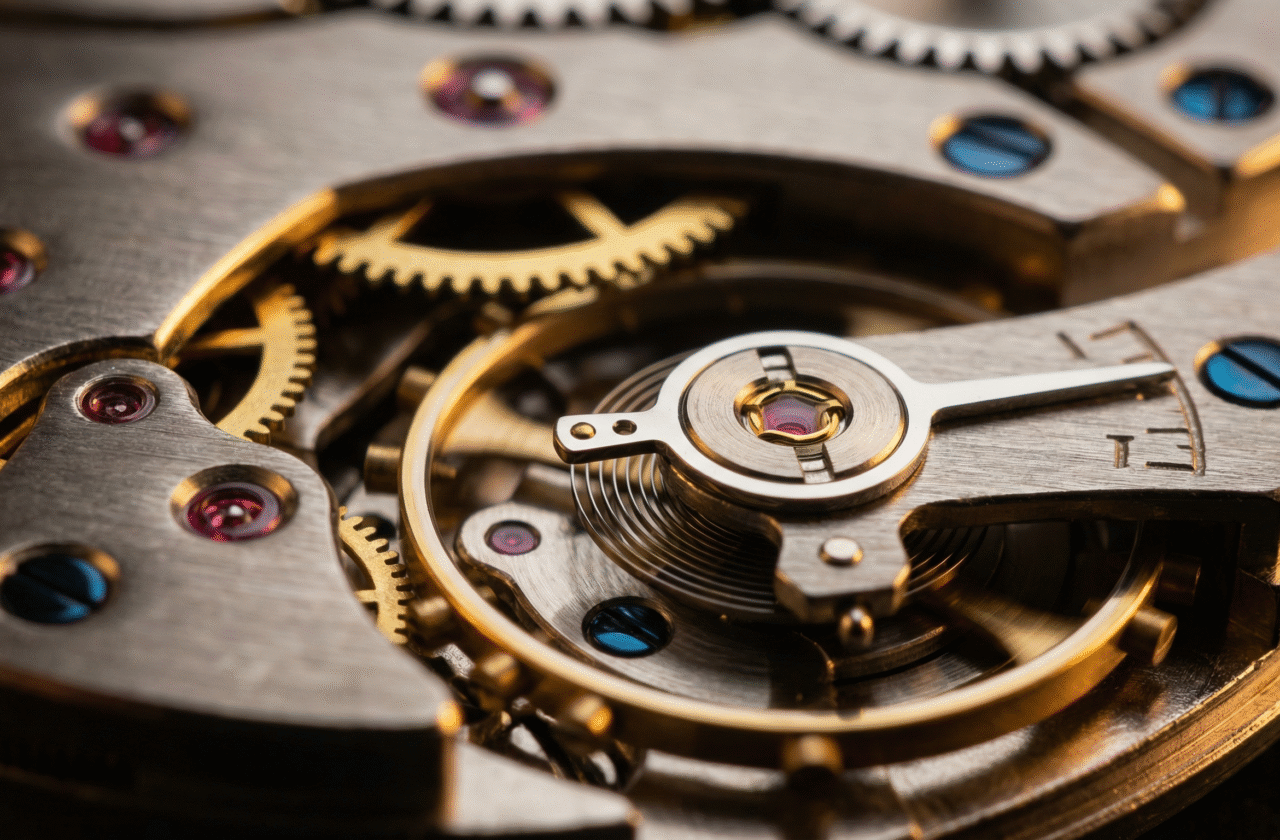
At the heart of your watch is the movement, or caliber. This is the engine of your timepiece, a complex assembly of gears, springs, and jewels. The mainspring, housed in a barrel, provides the power. As it unwinds, it drives a series of gears known as the gear train. The gear train transmits power to the escapement, which is the timekeeping element of the watch. The escapement, in turn, regulates the release of energy from the mainspring, ensuring that the hands move at a precise and constant rate. The balance wheel, with its delicate hairspring, oscillates back and forth, creating the familiar ticking sound of a mechanical watch.
Why Maintenance Matters
With so many moving parts, friction is the enemy of a mechanical watch. To combat this, watchmakers use synthetic jewels, typically rubies, at high-friction points. These jewels provide a smooth, durable surface for the gears to pivot on. However, these jewels require lubrication to function properly. Over time, these lubricants can dry up, thicken, or become contaminated with microscopic dust particles. When this happens, friction increases, causing wear and tear on the delicate components of the movement. This can lead to a loss of accuracy and, eventually, to a complete failure of the watch. Regular automatic watch maintenance ensures that the movement is cleaned, lubricated, and adjusted, keeping it in optimal condition.
Different Movement Types and Their Needs
Not all automatic movements are created equal. While the basic principles are the same, there are significant differences between various movement types, which can affect their maintenance requirements. The most common types are Swiss (like ETA and Sellita), Japanese (like Seiko and Miyota), and in-house movements made by luxury brands.
| Movement Type | Common Examples | Characteristics | Maintenance Considerations |
|---|---|---|---|
| Swiss | ETA 2824, Sellita SW200 | High-quality, reliable, and widely used. | Parts are readily available, and most watchmakers are familiar with them. Servicing is straightforward. |
| Japanese | Seiko NH35, Miyota 9015 | Known for their robustness, reliability, and affordability. | Often more economical to replace than to service, especially in lower-priced watches. |
| In-house | Rolex Calibre 3235, Omega Co-Axial 8900 | Exclusive to a specific brand, often featuring unique technologies. | Require specialized knowledge and tools for servicing. Must be serviced by the manufacturer or an authorized service center. |
Understanding the type of movement in your watch will help you make informed decisions about its care and maintenance. While a watch with a common Swiss movement can be serviced by most qualified watchmakers, a watch with an in-house movement will require a trip back to the manufacturer. This is a crucial factor to consider when purchasing an automatic watch.
Daily and Weekly Care Routines
Consistent care is the secret to a long and healthy life for your automatic watch. You don’t need to be a watchmaker to perform these simple, yet vital, routines. Integrating these habits into your daily and weekly schedule will preserve your watch’s beauty and performance, making automatic watch maintenance feel less like a chore and more like a satisfying ritual.
Regular Wearing and Winding Techniques
An automatic watch is designed to be worn. The natural motion of your arm keeps the mainspring wound and the intricate mechanism ticking. If you wear your watch daily, it will likely never need manual winding. However, if you have a collection of watches or don’t wear your automatic for a few days, the power reserve will deplete, and the watch will stop.
To manually wind your watch, first, unscrew the crown if it’s a screw-down type. Gently turn the crown clockwise for about 30 to 40 rotations. You’ll feel a slight resistance when the mainspring is fully wound. Stop there. Never force it. This simple act breathes life back into your timepiece, ensuring the lubricants are distributed evenly and the watch is ready for action.
Proper Cleaning Methods
Your watch is exposed to everything you are: dust, sweat, and the occasional splash. A weekly cleaning is essential to keep it looking its best and to prevent grime from working its way into the bracelet and case. A clean watch is a happy watch.
Here is a simple, step-by-step guide to cleaning your watch safely:
- Prepare Your Station: Lay down a soft towel to protect your watch from scratches. You will need a soft-bristled brush (a child’s toothbrush works perfectly), a bowl of lukewarm water with a drop of mild soap, and a soft, lint-free microfiber cloth.
- Check the Crown: Before you begin, ensure the crown is fully screwed down or pushed in. This is the most critical step to prevent water from entering the case.
- Clean the Bracelet: If your watch has a metal bracelet, detach it from the case if you can. Submerge only the bracelet in the soapy water and use the soft brush to gently scrub between the links, where dirt and oils accumulate.
- Clean the Case: For the watch case itself, dip the brush in the soapy water and shake off the excess. Gently brush the case, paying attention to the lugs and the area around the bezel. Never submerge the entire watch case, even if it has a high water-resistance rating.
- Rinse and Dry: Rinse the bracelet and case under a gentle stream of clean water. Immediately pat everything dry with the microfiber cloth. Make sure no moisture is left, especially between the bracelet links and around the crown.
For leather straps, avoid water entirely. Simply wipe the strap with a dry microfiber cloth. For stubborn stains, a specialized leather cleaner is your best option.
Protecting Your Watch from Daily Hazards
Your daily life is full of potential dangers for a mechanical watch. Magnetism is a silent threat. Laptops, speakers, and even the magnetic clasp on a handbag can magnetize the delicate hairspring in your watch’s movement, causing it to run erratically fast. Try to keep your watch at least a few inches away from strong magnetic sources.
Sudden shocks are another enemy. While modern watches have shock-absorption systems, a hard impact from dropping your watch or hitting it against a doorframe can still damage the delicate pivots and jewels inside. Be mindful of your surroundings when wearing your timepiece.
When to Avoid Wearing Your Watch
Knowing when not to wear your watch is just as important as knowing how to care for it. Strenuous activities like playing sports, doing yard work, or any activity involving strong vibrations can be detrimental. The golf course, for example, is a notoriously dangerous place for an automatic watch due to the violent shock of the club hitting the ball.
Extreme temperatures should also be avoided. Leaving your watch in a hot car or wearing it in a sauna can cause the lubricants to thin and the metal parts to expand, affecting its accuracy. By being mindful of these situations, you can easily prevent unnecessary damage and ensure your watch remains a reliable companion for years to come.
Storage and Long-Term Maintenance
How you store your watch is as critical as how you wear it. Proper storage protects your timepiece from environmental hazards and ensures it’s ready to go when you are. Whether you’re putting it away for the night or for several months, a thoughtful approach to storage is a cornerstone of effective automatic watch maintenance.
Ideal Storage Conditions
An automatic watch is a delicate instrument that thrives in a stable environment. The enemies of a stored watch are humidity, extreme temperatures, and direct sunlight. These elements can wreak havoc on the movement, dial, and bracelet over time.
Here are the ideal conditions for storing your watch:
| Condition | Recommended Range | Why It Matters |
|---|---|---|
| Humidity | 40% – 60% RH | High humidity can compromise the gaskets and lead to moisture intrusion. Low humidity can dry out leather straps. |
| Temperature | 15°C – 25°C (60°F – 77°F) | Extreme heat can degrade lubricants and gaskets. Extreme cold can cause the movement to run slow. |
| Light | Dark or low light | Direct sunlight can fade the dial and bezel over time and degrade leather or rubber straps. |
A dedicated watch box with a soft lining is the perfect home for your watch. It provides a physical barrier against dust and scratches while helping to maintain a stable micro-environment. For added protection in humid climates, consider placing a small silica gel pack inside the watch box.
Watch Winders: Do You Need One?
A watch winder is a device that holds one or more automatic watches and rotates them to simulate the motion of the human wrist, keeping the mainspring wound. The debate over their necessity is a long-standing one in the watch community.
Here’s a simple breakdown to help you decide:
- If you wear your watch daily or rotate between just two: You probably don’t need a watch winder. A quick manual wind is sufficient to get a stopped watch going again.
- If you own multiple automatic watches, especially those with complex complications like a perpetual calendar or moon phase: A watch winder is a worthwhile investment. It saves you the time and hassle of resetting these complex functions every time you wear the watch.
- For the health of the watch: Keeping the movement constantly running ensures that the lubricants are evenly distributed, preventing them from coagulating. This can be beneficial for the long-term health of the watch, although the effect is debated by some watchmakers.
If you do opt for a winder, choose a high-quality one that allows you to set the number of turns per day (TPD) and the direction of rotation to match your specific watch model’s requirements.
Long-Term Storage Protocol (3+ months)
If you plan to store your watch for an extended period, a few extra steps are necessary. Storing a watch for months or years without proper preparation can lead to significant issues down the line.
- Clean the Watch Thoroughly: Follow the cleaning steps outlined in the previous section. Storing a watch with dirt and moisture on it is a recipe for corrosion.
- Let the Power Reserve Run Down: For long-term storage, it is generally recommended to let the watch stop. This reduces tension on the mainspring and wear on the movement components.
- Store in a Stable Environment: Place the watch in its box, away from light, humidity, and temperature extremes. A climate-controlled safe is an ideal location.
- Give it a Monthly Wind: Once a month, take the watch out and give it a full manual wind. Let it run for a few hours. This helps to keep the lubricants from settling and hardening.
Seasonal Maintenance Adjustments
Your watch care routine may need slight adjustments with the changing seasons. In the summer, you’re more likely to sweat, and the air is more humid. This means more frequent cleaning of the bracelet and case is necessary to prevent the buildup of salt and grime. It’s also a good time to have the water resistance of your watch checked, especially if you plan on swimming with it.
In the winter, the air is often drier, which can be tough on leather straps, causing them to become brittle. Consider applying a leather conditioner to keep the strap supple. The transition between the cold outdoors and warm indoors can also cause condensation to form on the inside of the crystal. If this happens and doesn’t dissipate quickly, it’s a sign that the gaskets may be failing and a trip to the watchmaker is in order.
Professional Servicing and Repairs
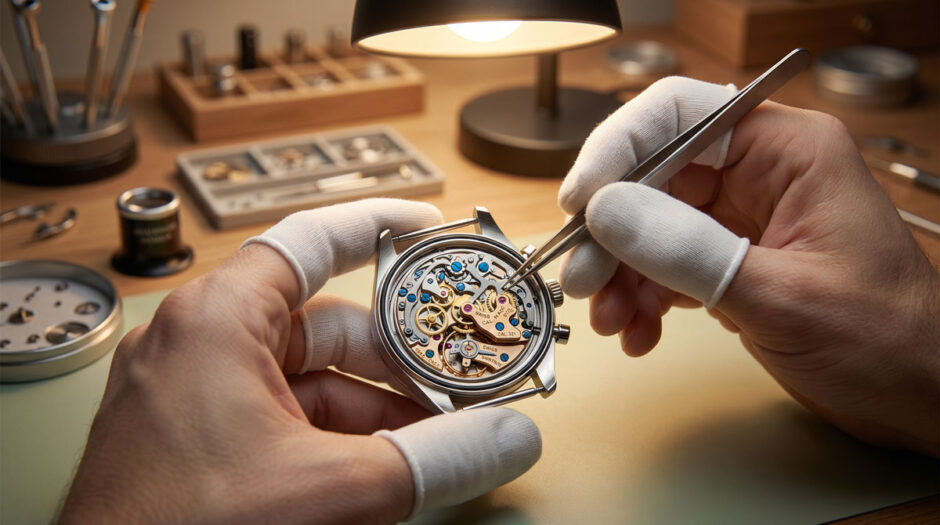
While daily care and proper storage are your first lines of defense, there comes a time when every automatic watch needs the expert touch of a professional. Think of it like the scheduled maintenance for a high-performance car. Professional servicing is a non-negotiable aspect of automatic watch maintenance, an investment that pays dividends in longevity, accuracy, and peace of mind.
Servicing Intervals and What’s Included
Most watch manufacturers recommend a full service every three to five years. However, some modern timepieces, like those from Rolex with their advanced lubricants, now have a recommended service interval of up to ten years. Always consult your watch’s manual for the specific recommendation for your model.
A full professional service is a meticulous and comprehensive process. Here’s what it typically includes:
- Complete Disassembly: The watchmaker will carefully dismantle the entire watch, separating the case, bracelet, and the hundreds of tiny components of the movement.
- Ultrasonic Cleaning: The disassembled movement parts are placed in special baskets and cleaned in an ultrasonic bath with a series of specialized solutions to remove all traces of old lubricants, dust, and grime.
- Inspection and Part Replacement: Each component is meticulously inspected for wear. Any worn or damaged parts, such as gears, springs, or gaskets, are replaced with genuine parts.
- Reassembly and Lubrication: The watchmaker painstakingly reassembles the movement, applying tiny, precise amounts of up to a dozen different types of oils and lubricants to the various friction points.
- Timing and Regulation: The reassembled movement is placed on a timegrapher, a machine that listens to the watch’s ticking, to test its accuracy. The watchmaker then makes fine adjustments to the balance wheel to regulate the timing, ensuring it keeps time within the manufacturer’s specifications.
- Case and Bracelet Refinishing: The case and bracelet are often polished and refinished to remove scratches and restore their original luster.
- Water Resistance Testing: Once the watch is fully reassembled, it undergoes a series of pressure tests to ensure its water resistance is intact.
Cost Analysis: Investment vs. Longevity
The cost of servicing an automatic watch can vary significantly depending on the brand, the complexity of the movement, and the watchmaker’s location. A basic service for a watch with a standard Swiss or Japanese movement might start around $200, while a service for a luxury timepiece with an in-house movement or complex complications can easily exceed $1,000.
While this may seem like a significant expense, it’s crucial to view it as an investment in the watch’s future. Neglecting service to save money in the short term will almost certainly lead to more extensive and costly repairs down the road.
| Maintenance Approach | Short-Term Cost | Long-Term Cost | Watch Lifespan |
|---|---|---|---|
| Regular Servicing (Every 3-5 Years) | Moderate (e.g., $300 every 4 years) | Predictable and manageable | Can last for generations |
| Neglecting Service | Zero | High (e.g., $1,500+ for major overhaul after 10 years) | Significantly shortened |
Regular servicing prevents the cascade of wear and tear that occurs when lubricants dry up. A $300 service every few years is far more palatable than a $1,500 bill for a complete movement overhaul that could have been avoided.
Finding a Qualified Watchmaker
Choosing the right person to entrust with your timepiece is a critical decision. For watches under warranty or those with in-house movements, the choice is simple: send it to the manufacturer’s authorized service center. This ensures that genuine parts are used and the work is done to the brand’s exact standards.
For older watches or those with common movements, an independent watchmaker can be an excellent choice. Look for a watchmaker with certifications from organizations like the American Watchmakers-Clockmakers Institute (AWCI) or the Watchmakers of Switzerland Training and Educational Program (WOSTEP). Ask for references, check online reviews, and don’t be afraid to ask about their experience with your specific brand or movement type.
Understanding Warranty Implications
It’s essential to understand how servicing affects your watch’s warranty. During the warranty period, you should only have your watch serviced by the manufacturer or an authorized agent. Having an independent watchmaker open the case will almost certainly void the warranty.
After the warranty has expired, you have more flexibility. However, be aware that some brands may refuse to service a watch in the future if it has been worked on by a non-authorized watchmaker, or they may charge a premium to correct any issues caused by improper servicing. Always weigh the cost savings of using an independent watchmaker against the potential long-term implications for your watch’s service history and value.
Troubleshooting Common Issues
Even with the most diligent care, you may occasionally encounter issues with your automatic watch. Knowing how to identify the problem and when to seek professional help is a key part of responsible ownership. This section provides a guide to some of the most common problems and what you can do about them.
Watch Stops Running
This is the most common issue and often has a simple solution. Before you panic, ask yourself a few questions. Has the watch been worn recently? If not, the power reserve may have simply run out. Try giving it a full manual wind (30-40 turns of the crown) and see if it starts ticking again. If it does, the problem is solved. If it doesn’t, or if it stops again shortly after being worn, there may be a more serious issue with the movement that requires a watchmaker’s attention.
Watch Loses or Gains Time
An automatic watch is not as accurate as a quartz watch, and a slight deviation of a few seconds per day is normal. However, if your watch suddenly starts gaining or losing a significant amount of time (more than 30 seconds per day), it’s a sign of a problem. The most common culprit is magnetism. You can purchase a relatively inexpensive watch demagnetizer online and attempt to solve the problem yourself. If that doesn’t work, the issue could be with the balance wheel or escapement, which will require professional servicing.
Water Inside the Case
If you see condensation or water droplets on the inside of the crystal, this is a critical issue that needs immediate attention. It means the water resistance of your watch has been compromised. Do not try to fix this yourself by placing the watch in rice or in the sun. This will not remove the moisture from the delicate movement and can actually cause more damage. Take the watch to a qualified watchmaker immediately. They will need to disassemble the watch, dry out the components, and replace the faulty gaskets.
Crown Won’t Screw Down
A screw-down crown is essential for water resistance. If you find that the crown won’t screw down smoothly, do not force it. This could strip the threads on the crown or the case tube, a costly repair. The issue could be as simple as a piece of debris in the threads. Try gently cleaning the threads with a soft brush. If that doesn’t work, the crown or case tube may be damaged and will need to be replaced by a professional.
Bracelet Links Are Loose
Over time, the screws or pins that hold the links of your bracelet together can become loose. This is a safety issue, as a loose link could fail, causing your watch to fall off your wrist. Regularly inspect your bracelet for any loose links. If you find one, you can often tighten it yourself with a small screwdriver (for screw-in links) or a pin-pusher tool (for pin-and-collar systems). If you’re not comfortable doing this, a jeweler or watchmaker can do it for you in a matter of minutes.
DIY vs. Professional Service: A Decision Tree
When an issue arises, it can be tempting to try to fix it yourself. Here is a simple decision tree to help you decide when to tackle the problem and when to call in a professional.
Is the watch running?
|-- No -> Have you tried manually winding it?
|   |-- Yes -> Did it start?
|   |   |-- Yes -> Problem solved!
|   |   |-- No -> See a watchmaker.
|   |-- No -> Wind it and see if it starts.
|-- Yes -> Is it keeping accurate time?
|   |-- No -> Is it off by more than 30 seconds/day?
|   |   |-- Yes -> Try demagnetizing it. If that fails, see a watchmaker.
|   |   |-- No -> This is likely within normal range.
|   |-- Yes -> Is there moisture inside the case?
|       |-- Yes -> See a watchmaker immediately.
|       |-- No -> Is the crown screwing down properly?
|           |-- No -> Try cleaning the threads. If that fails, see a watchmaker.
|           |-- Yes -> Are the bracelet links secure?
|               |-- No -> Try tightening them yourself or see a jeweler.
|               |-- Yes -> Your watch is likely in good health!
A Year of Care: Your Seasonal Maintenance Calendar
Just as you adapt your wardrobe to the seasons, your automatic watch benefits from a calendar-aware approach to its care. Environmental changes throughout the year present different challenges to your timepiece. Following a seasonal schedule for your automatic watch maintenance ensures you’re always one step ahead, protecting your watch from the specific risks each season brings.
Spring (March – May): The Annual Check-Up
Spring is the season of renewal, making it the perfect time for an annual review of your watch’s condition after the long winter.
- Inspect for Winter Wear: Closely examine the case, crystal, and bracelet for any scratches or dings that may have occurred during the winter months. Make a note of any significant marks that might need professional polishing during your next service.
- Check the Timekeeping: As you transition to more outdoor activities, give your watch’s accuracy a check. Set it to a reliable time source and monitor its performance over a few days. Any significant deviation could signal a need for regulation.
- Plan for Summer: Summer often means swimming and more time outdoors. If you plan to use your watch in water, now is the ideal time to have its water resistance tested by a professional. It’s a simple, inexpensive test that can prevent a catastrophic failure.
Summer (June – August): Beating the Heat and Humidity
The summer months are often the most hazardous for a watch due to heat, humidity, and increased activity.
- Clean More Frequently: Sweat and sunscreen can build up quickly on your watch. Increase your cleaning routine to twice a week, paying special attention to the bracelet and the back of the case to prevent corrosion and skin irritation.
- Rinse After Swimming: If you swim with your watch in the ocean or a chlorinated pool, always rinse it thoroughly with fresh water afterward. Salt and chlorine are highly corrosive and can damage the gaskets and finish over time.
- Avoid the Hot Car: Never leave your watch in a parked car on a hot day. The extreme temperatures inside a vehicle can damage the movement’s delicate lubricants and compromise the gaskets, leading to a loss of water resistance.
Fall (September – November): Winding Down and Preparing for Storage
As the weather cools and you spend more time indoors, your watch care routine can relax a bit, with a focus on preparing for the less active months ahead.
- Leather Strap Care: If you switch to a leather strap for the fall, inspect it for any wear and tear. Apply a quality leather conditioner to keep it supple and prevent it from drying out in the crisp autumn air.
- Assess Your Collection: If you have multiple watches, this is a good time to decide which ones you’ll be wearing most frequently during the winter. For those that will be stored, ensure they are clean and ready for a period of rest.
- Check Your Winder: If you use a watch winder, ensure it is functioning correctly. Check the rotation settings and make sure it’s providing the right amount of movement for the watches you’ll be storing.
Winter (December – February): Protection from the Cold and Dryness
Winter brings its own set of challenges, primarily related to temperature changes and dry air.
- Beware of Condensation: The rapid shift from the cold outdoors to a warm, heated room can cause condensation to form inside your watch if the gaskets are not perfectly sealed. If you notice fog under the crystal that doesn’t clear within an hour, it’s a sign of a problem.
- Moisturize Leather Straps: The dry air of heated homes can be particularly harsh on leather. A monthly application of conditioner will prevent your strap from becoming brittle and cracking.
- Mind the Cuffs: Winter clothing often means heavy coats and tight cuffs. Be mindful when putting on and taking off your outerwear to avoid catching your watch and causing a shock or dropping it.
By following this simple seasonal calendar, you can proactively address the most common environmental risks to your automatic watch, ensuring it remains a faithful and beautiful companion all year round.
Frequently Asked Questions About Automatic Watch Maintenance
- 1. Do automatic watches need maintenance?
- Absolutely. An automatic watch is a complex mechanical device with hundreds of moving parts. To ensure its accuracy and longevity, it requires regular maintenance. This includes routine cleaning, proper storage, and professional servicing every few years. Neglecting maintenance can lead to decreased performance and costly repairs down the line, so it is a crucial aspect of owning a fine timepiece.
- 2. How often should you service an automatic watch?
- The general rule of thumb is to have your automatic watch professionally serviced every three to five years. However, this can vary depending on the brand and model. Some modern watches, particularly from luxury brands like Rolex, have service intervals of up to ten years due to advancements in lubricants and materials. Always consult your watch’s user manual for the manufacturer’s specific recommendation.
- 3. Can you clean an automatic watch yourself?
- Yes, you can and should perform regular light cleaning yourself. Wiping the case and bracelet with a soft, lint-free microfiber cloth can be done daily. For a more thorough weekly cleaning, you can use a soft brush and mild soapy water on the bracelet and case, provided the crown is securely screwed down. However, internal cleaning of the movement should only ever be performed by a qualified watchmaker during a professional service.
- 4. What is the average cost of watch servicing?
- The cost of servicing can vary widely. For a watch with a standard Swiss or Japanese movement, you can expect to pay between $200 and $500. For luxury brands with in-house movements or complex complications, the cost can range from $800 to well over $2,000. While it may seem expensive, this preventative maintenance is far more affordable than the major repairs that will be needed if servicing is neglected.
- 5. Is a watch winder necessary?
- A watch winder is not strictly necessary, but it can be very convenient. If you wear your watch every day, your natural movement is enough to keep it wound. However, if you own multiple automatic watches and rotate them, a winder keeps them ready to wear without the need to reset the time and date. For watches with complex complications like a perpetual calendar, a winder is highly recommended to avoid the tedious process of resetting.
- 6. How do you know if your watch needs servicing?
- The most obvious sign is a noticeable decline in accuracy. If your watch starts gaining or losing a significant amount of time each day, it’s a clear indication that the movement needs attention. Other signs include a rattling sound from inside the case, difficulty winding the crown, or a power reserve that doesn’t last as long as it used to. If you notice any of these, it’s time to visit a watchmaker.
- 7. What’s the difference between cleaning and servicing?
- Cleaning refers to the external care of the watch—wiping down the case and bracelet to remove dirt and oils. It’s something you can do at home. Servicing, on the other hand, is a complete overhaul of the watch’s internal movement. It involves disassembling, cleaning, lubricating, and reassembling the hundreds of tiny parts, as well as replacing any worn components. Servicing should only be done by a professional.
- 8. Can magnetism damage my automatic watch?
- Yes, magnetism is a common and disruptive force for automatic watches. Exposure to a strong magnetic field, such as from a speaker or a laptop, can magnetize the delicate hairspring in the balance wheel. This causes the coils of the spring to stick together, shortening its oscillation and making the watch run significantly fast. The good news is that this is usually reversible with a simple demagnetization process.
- 9. How long can an automatic watch last with proper care?
- With proper care and regular professional servicing, a high-quality automatic watch can last for many generations. It is not uncommon for people to inherit and wear watches that belonged to their grandparents. These timepieces are built to last, and investing in their maintenance is an investment in a legacy that can be passed down through your family.
- 10. What should I do if my watch stops working?
- Don’t panic. The first step is to try manually winding the watch. If the power reserve has simply run out, this will get it started again. If it remains unresponsive after a full wind, or if it stops again soon after, do not attempt to open the case or fix it yourself. Take it to a qualified watchmaker for a proper diagnosis. Attempting a DIY repair can cause further damage and lead to a more expensive professional repair.
A Timeless Commitment: Your Watch, Your Legacy
Owning an automatic watch is about more than just telling time. It is an appreciation for craftsmanship, a connection to a rich history of horology, and a commitment to preserving a piece of mechanical art. The journey of automatic watch maintenance is not a burden, but a rewarding ritual that deepens the bond between you and your timepiece. From the simple act of a daily wind to the periodic trust placed in a skilled watchmaker, every step you take is a testament to your dedication.
By embracing the principles of consistent care, thoughtful storage, and timely professional servicing, you are not just maintaining a machine; you are safeguarding a legacy. You are ensuring that this intricate dance of gears and springs will continue to measure the moments of your life, and perhaps even the lives of those who come after you. Take pride in this responsibility, and your watch will reward you with a lifetime of faithful, beautiful service.