Flare Crypto Reddit: The Complete Guide to FLR, FAssets, and the Post-Airdrop Era

Today, January 30, 2026, marks a pivotal moment for the Flare Network. The much-discussed FlareDrop program, a 36-month token distribution that has been a cornerstone of the community, is coming to an end. This transition from a distribution-led growth model to one driven by pure utility is a critical juncture that will undoubtedly shape the future of this Layer 1 blockchain. As the community on Reddit and other platforms buzzes with speculation, it’s the perfect time to take a deeper look at what flare crypto is, what the community is saying, and what this new era holds.
This article will serve as your comprehensive guide to understanding Flare, not just as a piece of technology, but as a living ecosystem with a vibrant and vocal community. We’ll explore the core technologies that make Flare unique, delve into the real conversations happening on Reddit, and analyze the investment potential from a balanced perspective. By the end, you’ll have a clear picture of Flare’s value proposition and be better equipped to navigate the post-airdrop landscape.
Forget the superficial explanations you’ll find elsewhere. We’re going beyond the basics to provide you with a nuanced understanding of Flare’s technology, its community, and its future. Let’s dive in.
Understanding Flare: More Than Just Another Blockchain
At its core, Flare is an EVM-compatible Layer 1 blockchain designed for data-intensive use cases. But what does that actually mean? In a landscape crowded with countless blockchains, Flare distinguishes itself by tackling a fundamental problem: the isolation of blockchains and the untapped potential of non-smart-contract assets. A staggering two-thirds of the total value in the crypto market is locked in assets like XRP, Bitcoin (BTC), and Dogecoin (DOGE), which cannot natively interact with smart contracts and, therefore, the world of decentralized finance (DeFi).
Flare aims to solve this by providing a robust infrastructure for data and interoperability. It achieves this through three core technologies that work in concert:
| Technology | Function | Key Benefit |
|---|---|---|
| FTSO (Flare Time Series Oracle) | Provides reliable, real-time price data to the network | Lower cost, faster updates than Chainlink |
| FAssets | Mints synthetic versions of non-smart-contract assets (fXRP, fBTC, fDOGE) | Unlocks $2+ trillion in dormant capital for DeFi |
| State Connector | Verifies external chain states and Web2 data | Enables secure cross-chain communication |
By focusing on these core technologies, Flare positions itself as the “blockchain for data,” a platform that prioritizes the secure and decentralized acquisition and use of information, rather than just being another general-purpose computation chain.
Why Flare Matters for XRP Holders and DeFi Enthusiasts
The implications of Flare’s technology are particularly significant for the XRP community and DeFi enthusiasts. The concept of “XRPfi” – the use of XRP in decentralized finance – is at the heart of Flare’s value proposition. With over 90 million fXRP already minted and deployed across various protocols, the demand for this new form of utility is clear. Platforms like SparkDex, Kinetic, and Enosys are already leveraging FAssets to offer a range of DeFi services, from trading and lending to yield farming, all powered by assets that were previously excluded from the DeFi ecosystem.
Inside the Flare Community on Reddit: Sentiment, Concerns, and Opportunities
To truly understand a crypto project, you need to listen to its community. On Reddit, the official r/FlareNetworks subreddit, with its 1.8K weekly visitors and active contributors, provides a raw and unfiltered look into the world of Flare. The discussions are a mix of excitement, skepticism, and genuine curiosity, offering valuable insights that you won’t find in a whitepaper. The main topics of conversation revolve around price speculation, the intricacies of the FlareDrop program, the potential of FAssets, and the best strategies for staking and delegation.
The Skeptics vs. Believers Debate
The sentiment within the Flare community is anything but monolithic. It’s a dynamic and often polarized environment where passionate believers clash with cautious skeptics. On one side, you have users who are deeply invested in the long-term vision of Flare, particularly the promise of XRPfi and the potential for FAssets to unlock trillions of dollars in dormant capital. They point to the strong partnerships with companies like Kraken, LayerZero, and Ankr as evidence of the project’s legitimacy and future potential.
On the other side, there’s a vocal contingent of skeptics who are quick to point out the project’s slow execution, often referring to it as a series of “announcements about announcements.” The 93% drop from the all-time high price is a sore point for many early investors, and there are frequent discussions about whether the project can overcome its initial stumbles. The change of the token’s name from Spark to Flare and the delays in the airdrop distribution have also contributed to a sense of frustration and skepticism among some community members.
Real Reddit Quotes and Discussions
The discussions on Reddit offer a fascinating glimpse into the minds of Flare investors. You’ll find threads with titles like “Is there hope?” where users express their concerns about the token’s price performance, alongside optimistic posts highlighting the long-term potential of the technology. Here are a few examples of the types of conversations you might encounter:
“I’m down 41% on this coin with a lot invested in it. Is there hope? I need something positive to happen with this coin man. I’ve always been fond of flare but it seems like the coin is falling into an abyss with no end in sight.”
“If xrp ever goes to the moon, it’s likely to bring flare along with it. XRP and Flare: The Unlikely Duo Powering the Future of Decentralized Finance.”
“Has awesome passive income with staking / delegation rewards and 2.5% monthly flaredrop distribution. Pretty much a top 70 coin on CoinMarketCap…”
These quotes illustrate the emotional rollercoaster that many Flare investors are on. The community is a microcosm of the broader crypto market, with its mix of high hopes, deep-seated fears, and unwavering belief in the power of decentralized technology.
The End of an Era: What Happens When Flare’s $252M Airdrop Ends
The FlareDrop program has been a defining feature of the Flare Network for the past three years. This ambitious distribution mechanism, which was approved by a staggering 93% of the community in January 2023, has been systematically releasing 24.2 billion FLR tokens—worth approximately $252 million at current prices—to network participants. The monthly airdrops, which rewarded users for holding and staking their FLR, have been a powerful engine for growth, helping the network to reach over 860,000 active addresses and process around 500,000 daily transactions.
Flare Network Metrics (Post-FlareDrop):
• Active Addresses: 860,000
• Daily Transactions: ~500,000
• Total Value Locked (TVL): $200 million
• FLR Staked: 83% of total supply
• Community Stake: 98% of staked FLR
• fXRP Deployed: 90+ million across protocols
From Distribution-Led to Utility-Driven Economics
With the final FlareDrop distribution taking place on January 30, 2026, the network is now entering a new and critical phase. The era of distribution-led growth is over, and the focus is now squarely on utility-driven economics. This means that the network’s success will no longer be propped up by the promise of free tokens, but will instead depend on the real-world utility of its technology and the value it provides to users and developers.
This transition brings with it a number of significant changes. There will be no more monthly airdrops, and new FLR issuance will be capped at a maximum of 5 billion tokens annually, a move that is designed to drive inflation towards zero over time. This increased predictability and transparency in the token’s economics is a crucial step towards building a sustainable and long-term ecosystem. It also eliminates the uncertainty of future dilution, allowing investors and developers to make more rational and informed decisions.
The Utility Thesis: Can Flare Survive Without Airdrops?
The big question on everyone’s mind is whether Flare can not only survive but thrive in a post-airdrop world. The network’s proponents argue that the three-year distribution program has successfully bootstrapped a vibrant and engaged community, and that the underlying technology is strong enough to sustain the network’s growth. They point to the impressive network metrics as evidence of a solid foundation.
The Flare Foundation is also actively working on developing new protocol revenue mechanisms that will further enhance the network’s sustainability. In the first quarter of 2026, the foundation plans to submit governance proposals that will explore how fees from the FAsset system can be used to support the network and offset ongoing issuance. This represents a fundamental shift from an economy based on inflation to one based on revenue, a crucial step towards long-term viability.
The Technical Foundation: FTSO, FAssets, and State Connector
To fully appreciate Flare’s potential, it’s essential to understand the innovative technologies that power the network. These are not just abstract concepts; they are the building blocks of a new data-centric blockchain ecosystem.
FTSO (Flare Time Series Oracle): Decentralized Price Data
The Flare Time Series Oracle (FTSO) is a decentralized oracle that provides fast, accurate, and secure price data to the network. Unlike traditional oracles that rely on a single source of truth, the FTSO aggregates data from a network of over 100 independent data providers. This decentralized approach makes the FTSO highly resistant to manipulation and ensures that the data is always reliable. The FTSO is not only more secure than centralized alternatives, but it’s also more cost-effective, providing data at a fraction of the cost of other oracle services. This makes it an attractive option for developers who need access to reliable real-world data for their dApps.
FAssets: The Game-Changer for Non-Smart-Contract Assets
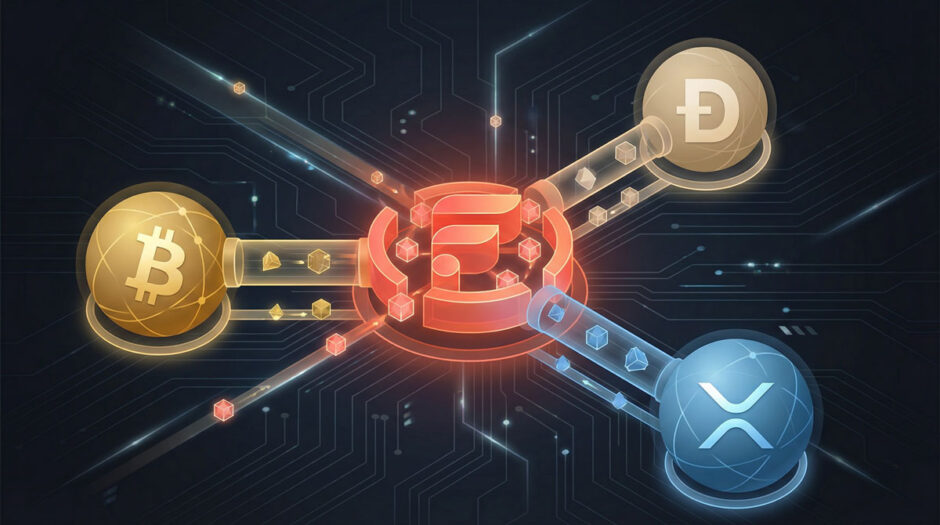
FAssets are at the heart of Flare’s mission to unlock the value of non-smart-contract assets. This revolutionary system allows users to mint synthetic versions of assets like XRP, BTC, and DOGE, which can then be used in DeFi applications on the Flare network. The process is simple but secure. Users lock their original assets on their native chains, and a decentralized system of agents verifies the lock and mints the corresponding FAsset on Flare. The system is overcollateralized to protect against price fluctuations, and the decentralized nature of the agents ensures that the process is trustless and secure. With over 90 million fXRP already deployed across various protocols, the FAssets system is already proving to be a powerful tool for unlocking new sources of liquidity and creating new opportunities for yield generation.
State Connector: Cross-Chain Communication
The State Connector is the final piece of Flare’s technological puzzle. This innovative protocol allows Flare to securely and trustlessly verify the state of any open system, whether it’s another blockchain or a traditional web API. This is a crucial component for enabling seamless cross-chain communication and data integration. The State Connector is supported by a network of decentralized attestation providers who are responsible for verifying the accuracy of the data. This makes the State Connector both faster and more secure than existing cross-chain solutions, opening up a world of possibilities for developers who want to build truly interoperable dApps.
Is Flare a Good Investment? Analyzing Risk vs Reward
Investing in any cryptocurrency is a high-risk, high-reward endeavor, and Flare is no exception. The project has a number of compelling features that could make it a very attractive investment, but it also has its fair share of risks. Here’s a balanced look at the bull and bear cases for Flare.
The Bull Case
The bull case for Flare is built on the long-term potential of the XRPfi ecosystem and the FAssets system. If Flare can successfully unlock even a fraction of the $2+ trillion in value that is currently locked in non-smart-contract assets, the upside could be enormous. The project also has a number of strong partnerships with major players in the crypto space, including Kraken, LayerZero, and USDT0, which lends it a great deal of credibility. The fact that institutional investors are showing confidence in the post-distribution phase is another positive sign. Finally, Flare’s unique data-centric positioning and limited competition give it a significant first-mover advantage in a potentially massive market.
The Bear Case and Real Risks
The bear case for Flare is primarily centered on the project’s extreme price volatility and slow execution. The 93% drop from the all-time high is a major red flag for many investors, and the project’s history of delays and missed deadlines has eroded trust in the community. There are also significant regulatory risks to consider, as the crypto landscape is constantly evolving. Finally, the project is still in its early stages of development, and there is no guarantee that it will be able to achieve its ambitious goals. The ecosystem is still building real adoption, and there is a risk that it will fail to gain traction in a crowded and competitive market.
For Different Investor Types
Ultimately, whether or not Flare is a good investment depends on your individual risk tolerance and investment goals. For speculators, Flare is a high-risk, high-reward play that could potentially deliver significant returns in the short term. For long-term believers, the focus should be on the adoption of the XRPfi ecosystem and the growth of protocol revenue. For those who are more risk-averse, staking and delegation can provide a steady stream of passive income with a lower risk profile. And for developers, Flare offers a unique opportunity to build on an EVM-compatible chain with a powerful set of data and interoperability tools.
Getting Started with Flare: A Practical Guide
If you’re interested in getting involved with the Flare Network, here’s a practical guide to help you get started. From buying your first FLR tokens to staking and earning rewards, we’ll walk you through the process step-by-step.
How to Buy FLR
FLR is available on a number of major cryptocurrency exchanges, including Kraken, Bitstamp, Coinbase, and Gate.io. The process for buying FLR is similar to buying any other cryptocurrency. You’ll need to create an account on an exchange, deposit funds, and then place an order for FLR. Once you’ve purchased your FLR, you can either store it on the exchange or transfer it to a personal wallet for added security. Some popular wallet options for Flare include Bifrost Wallet, Atomic Wallet, and hardware wallets like Ledger and Trezor.
Staking and Delegation for Rewards
One of the most attractive features of the Flare Network is the ability to earn rewards through staking and delegation. To stake your FLR, you’ll need to have a minimum of 50,000 FLR and be willing to lock it up for a minimum of 14 days. You can stake your FLR to a maximum of three different validators. The rewards for staking vary depending on the validator you choose, but you can typically expect to earn an annual return of 10% or more. You can also earn rewards by delegating your wrapped FLR (WFLR) to FTSO data providers. This is a great way to earn passive income while helping to secure the network.
Wrapping FLR and Using WFLR
To delegate your FLR to FTSO data providers, you’ll first need to wrap it into WFLR. This is a simple process that can be done through a wallet like Bifrost Wallet. Once you’ve wrapped your FLR, you can then delegate it to a data provider of your choice. You’ll earn rewards for providing accurate price data to the network. This is a great way to put your FLR to work and earn a steady stream of passive income.
Flare Network vs. Chainlink, LayerZero, and Other Blockchains
To better understand Flare’s unique position in the market, it’s helpful to compare it to some of its main competitors. While there are many projects working on interoperability and data solutions, Flare’s approach is distinct in a number of key ways.
Flare vs. Chainlink
Chainlink is the undisputed leader in the decentralized oracle space, but Flare offers a compelling alternative. The main difference between the two is that Chainlink is an oracle service that can be integrated into any blockchain, while Flare is a full Layer 1 blockchain with its own enshrined oracles. This gives Flare a number of advantages, including lower costs and faster data feeds. Flare also goes beyond oracles with its FAssets system, which allows it to bring smart contract functionality to non-smart-contract chains. This is a feature that Chainlink does not offer.
Flare vs. LayerZero
LayerZero is a cross-chain messaging protocol that allows different blockchains to communicate with each other. While Flare also has cross-chain capabilities, its focus is on data rather than just messaging. Flare’s State Connector allows it to securely verify the state of any open system, which is a more powerful and versatile solution than a simple messaging protocol. It’s also worth noting that Flare has integrated LayerZero V2, which connects it to over 75 different chains. This means that Flare can leverage the strengths of both its own native interoperability solutions and LayerZero’s extensive network.
Flare vs. Polkadot/Cosmos
Polkadot and Cosmos are two of the most well-known interoperability projects in the crypto space. Polkadot uses a relay chain and parachains to achieve interoperability, while Cosmos uses the Inter-Blockchain Communication (IBC) protocol. While these are both powerful solutions, Flare’s approach is more specialized. Flare is specifically designed for data-intensive use cases and for bringing smart contract functionality to non-smart-contract chains. This gives it a unique advantage in a niche but potentially massive market.
Your Flare Questions Answered
- 1. What is the difference between FLR and WFLR?
- FLR is the native token of the Flare Network, used for transaction fees and staking. WFLR (Wrapped Flare) is the wrapped version of FLR, which is used for participating in the Flare Time Series Oracle (FTSO) and earning delegation rewards. You can wrap and unwrap your FLR at any time through a compatible wallet.
- 2. How much can I earn by staking FLR?
- The rewards for staking FLR vary depending on the validator you choose and the overall network conditions. However, you can typically expect to earn an annual return of 10% or more. You can also earn rewards by delegating your WFLR to FTSO data providers. The exact amount depends on the data provider’s performance and the network’s overall reward structure.
- 3. What happens to my FlareDrops after January 30, 2026?
- The FlareDrop program has now concluded. You will no longer receive monthly airdrops for holding or staking your FLR. The network is now transitioning to a utility-driven model, where rewards will be generated from protocol fees and other network activities. Your staking rewards will continue, but the additional FlareDrop incentives are no longer available.
- 4. Is Flare safe? What about security risks?
- Flare has implemented a number of security measures to protect the network, including a decentralized network of validators and overcollateralization for FAssets. However, like any cryptocurrency, there are always risks involved. It’s important to do your own research and understand the risks before investing. Smart contract risks, regulatory risks, and market risks are all factors to consider.
- 5. How does Flare compare to Ethereum for building dApps?
- Flare is EVM-compatible, which means that developers can easily port their Ethereum dApps to the Flare network. However, Flare offers a number of advantages over Ethereum, including lower costs, faster transaction times, and a unique set of data and interoperability tools. Flare is particularly well-suited for applications that need access to real-world data or cross-chain functionality.
The Future of Flare: What’s Next?
The Flare Network is at a crossroads. The end of the FlareDrop program marks a significant turning point for the project, and the coming months will be crucial in determining its long-term success. The technology is promising, the community is engaged, and the vision is ambitious. However, the project is not without its risks. The transition to a utility-driven economy will be a major test for the network, and it remains to be seen whether it can overcome its initial stumbles and achieve its full potential.
For those who are interested in Flare, now is the time to pay close attention. The project’s unique focus on data and interoperability, combined with its strong community and growing ecosystem, make it a project worth watching. Whether you’re an investor, a developer, or simply a curious observer, the Flare Network is a project that is sure to generate a lot of discussion in the months and years to come.
We encourage you to join the conversation on Reddit, do your own research, and decide for yourself whether Flare is the right fit for you. The future of Flare is in the hands of its community, and it will be exciting to see what they build together.